




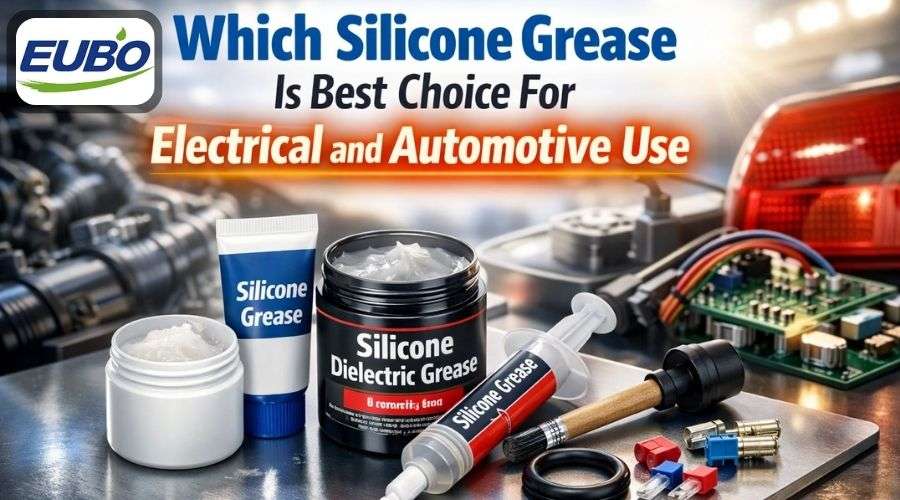
Regular vehicle and equipment maintenance errors can accumulate over time to result in significant costs down the line when called to task (e.g., repairs). Silicone grease is one of the many maintenance products that affect reliability, moisture protection and time spent finding a cause for failure. Properly applied, silicone grease will aid in preventing moisture from entering a connector (e.g., weather sealed), but also helps reduce the likelihood of corrosion and allow rubber parts to retain their moisture.
Improperly applied silicone can attract dust and debris, create problems with some connectors, and lead to premature seal failures (e.g., wasted repair labour hours and delayed delivery ets). This guide explains the function and utility of silicone grease in automotive/electrical applications, important specifications relevant to its use, and how to choose the right type of silicone grease for your fleet or workshop operations.
Fleet downtime is typically not the result of a single catastrophic failure, but rather, a cumulative effect of many minor problems that occur over time (e.g., intermittent lights, sensor problems, trailer plug issues, battery terminal corrosion, rubber bushings squeaking, water entering connectors from washing or heavy rain). Silicone grease will significantly reduce the occurrence of most of these problems by providing a waterproof barrier that is unaffected by temperature changes, road spray, and time of storage.
Get a Custom Quote for Bulk Silicone Grease Orders
Unlike many general-purpose oils, silicone grease typically does not evaporate quickly, does not wash out easily, and remains usable across hot engine bays and cold winter starts. That consistency helps you standardize maintenance steps and reduce “it worked once but not again” surprises.
Silicone grease is a thick lubricant made from silicone oil combined with a thickening agent. Once applied to a component, it behaves like a long-lasting paste that stays in one place. Its main job in many automotive and electrical applications is different from that of common bearing grease. This grease is not for improving metal-on-metal lubrication but to act as a protective barrier and keep the component in a pristine condition.
Once the grease is applied, it fills the small gaps and surface imperfections. This slows down moisture entry and reduces exposure to oxygen and contaminants. The result is corrosion spreads far more slowly and makes seals more effective. Many silicone greases are also electrically insulating, and this is really useful in protecting connector housings.
For electrical maintenance, silicone grease is the go-to solution for protection and prevention of electrical components. When applied to connector seals and housings, it helps block water, salt, dust, and cleaning chemicals that commonly cause corrosion and faulty transfer of electricity. This is especially relevant for vehicles that run in wet climates, coastal regions, or winter roads treated with de-icing salt.
It also supports reliability over time. Silicone grease tends to stay stable across temperature swings, so the protection you apply during scheduled maintenance is more likely to remain in place until the next service session. Another advantage of applying silicone grease is easier disassembly. Grease-coated connectors are less likely to seize due to corrosion, which saves time during troubleshooting and reduces the risk of breaking clips or damaging wiring when you are working fast.
The common mistake is treating silicone grease as something you “pack into the contacts.” On many connectors, the best practice is to protect the seal area and the outer surfaces, allowing the metal contacts to do their job without being coated in a thick insulating layer.
On the automotive side, silicone grease is widely used around rubber and plastic components. It helps maintain flexibility in rubber seals, weatherstrips, grommets, and boots by reducing drying and sticking. That can prevent doors from sticking in freezing weather, reduce squeaks from seal friction, and improve the long-term performance of parts designed to keep water and dust out.
Silicone grease also tolerates heat and cold better than many general lubricants. For car fleet owners, that means operational benefits like fewer repeat repairs caused by water intrusion and fewer replacements of cracked or noisy seals.
The caution here is compatibility and placement. Silicone grease is not the right choice for every high-load friction point, and it should not be used where a conductive or metal-specific anti-seize product is required.
Not all silicone greases are interchangeable, even when the label looks similar. Common silicone grease types you will come across while browsing the market are general-purpose silicone grease used for seals and light lubrication. Then there is dielectric silicone grease marketed specifically for electrical protection, and for the industrial machinery preservation a special industrial-grade silicone grease which is formulated for wider temperature ranges or harsher chemical exposure.
Some products are designed to be more resistant to washout, while others prioritize compatibility with certain elastomers used in automotive seals. Another common type of grease is food-grade silicone grease. This is mainly utilized in facilities with contamination-control requirements. although that is less common for typical fleet maintenance.
Specifications help you avoid expensive trial-and-error. Temperature range is the first aspect you should check for. If the grease is temperature sensitive and stiffens in cold weather or thins too much near heat sources, it will not protect reliably. Look for a stated operating range that matches your climate and under-hood realities, not just warehouse storage conditions.
Compatibility is the next risk reducer. A suitable silicone grease should be compatible with the rubber and plastics you actually have, such as common automotive elastomers used in boots and seals. If the supplier cannot provide compatibility guidance or documentation, you risk swelling, softening, or premature failure of seals that were otherwise fine.
Consistency or thickness of the grease is another aspect to check for. Grease that is too thin can, over time, shift from the seal area. On the other hand, grease that is too thick can be messy and encourage over-application. For electrical work, dielectric strength and water resistance are two measures that indicate the grease’s ability to protect, and not just lubricate. Finally, pay attention to packaging and batch consistency. In fleet maintenance, inconsistent product quality creates inconsistent results, which show up as rework and unpredictable downtime.
Conventional lubricants can work well for many mechanical jobs, but they often behave differently around water exposure, rubber seals, and electrical connectors. Silicone grease is usually chosen when you need a stable, water-resistant barrier that supports sealing and long intervals, rather than a lubricant designed for high-pressure metal contact.
| Temperature resistance | Typically, strong performance across wide hot/cold swings | Varies widely; some break down faster under heat or thicken in cold |
| Longevity | Often long-lasting and resistant to drying out | Can evaporate, wash off, or oxidize depending on formulation |
| Electrical safety | Commonly insulating and used to protect connector seals and housings | Some are conductive or can cause issues around sensitive electrical components |
| Maintenance frequency | Often supports longer intervals for sealing/protection tasks | May require more frequent reapplication in wet/dirty conditions |
| Cost effectiveness | Higher unit cost can be offset by fewer repeat faults and less rework | Lower unit cost, but can increase labor if it fails early or washes away |
In fleet and transport maintenance, silicone grease is applied on multiple components of the vehicle, such as trailer connectors and plug housings, battery terminal protectors (around, not replacing, proper cleaning and tightening), ignition and spark plug boots and connectors for lighting and sensors that are exposed to weather conditions. Apart form components the grease is also applied on rubber door seals, grommets, to reduce sticking, and make sealing more efficient.
In broader industrial settings, it shows up in sealed housings, cable entries, and equipment stored outdoors, where moisture and corrosion are recurring problems. The pattern is consistent: silicone grease is used where you want barrier protection and seal support, not where you need extreme-pressure lubrication for heavy mechanical load.
For B2B buying, the supplier’s reliability is part of the product. A reliable supplier with an upstanding reputation is transparent about product information. That means clear technical data, and specs of the grease is communicated freely. These specs include stated operating temperature range, and material compatibility guidance. A premium supplier also delivers quality packaging as that plays a crucial role in keeping grease completely pure and unadulterated.
Lead times and availability are also issues that you need to pay attention to while searching for an authentic grease supplier. A product that is “perfect” on paper but frequently out of stock creates delays and forces last-minute substitutions, which is a common cause of inconsistent maintenance results. Pay attention to how the supplier handles questions about use on connectors, seals, and plastics. A supplier that can explain correct application and limitations helps you avoid mistakes that lead to comebacks.
Wholesale purchasing can reduce unit cost, but the bigger advantage is uniform quality. When teams use the same product across sites, then the risk of faults occurring due to incompatible grease is eliminated and this saves maintenance costs and operational disruption. Bulk purchasing also reduces procurement time and avoids service delays caused by “we ran out” situations.
The best approach for a productivity boost is to buy the right quantity for your actual usage rate and storage conditions. Overstocking can create waste if containers sit open, get contaminated, or exceed shelf-life guidance.
Silicone grease performs best when it is free form contamination and adequate storage conditions are the main determinant in preservation of the silicone grease. Store containers should be sealed, and kept in a dark place. The storage environment should be kept within the temperature limits recommended by the manufacturer. In workshops, contamination is the main culprit that makes protective grease ineffective and messy. In workshops, dirt and metal particles stick to the grease.
Other measures and precautions that can keep the grease uncontaminated is proper handling. The grease should be applied with clean applicators and double-dipping dirty gloves into bulk containers should be stopped as it spreads contaminants in the storage container. If you apply silicone grease to electrical connectors, keep the application targeted to seals and housings so you do not create an insulating layer where metal-to-metal contact is required.
Demand for silicone grease is rising because automotive owners are using latest car models that have more electronic components, which need protection from external environmental contaminants. Global electric car sales exceeded 17 million in 2024 and are expected to exceed 20 million in 2025. These latest cars are usually fitted with more high-voltage components, more sealed connectors, and more weather-exposed harnessing that must stay dry and corrosion-free to avoid repeat faults.
Vehicle’s engines also contain more sensors and control systems. That means higher number of connection points where moisture and contaminants can get stuck and cause faults. One widely cited outlook projects the automotive sensor market growing from about USD 39.5B (2023) to USD 85.1B (2030), highlighting how quickly this complexity is scaling. Market estimates for silicone grease itself vary by source, but a recent published estimate places it at about USD 1.86B in 2024, growing to around USD 2.81B by 2032. intelmarketresearch.com The practical takeaway for fleet owners is straightforward: the cost of a small sealing or connector-protection step is usually minor compared with the cost of a missed delivery or a technician returning to fix the same issue twice.
Another driver is the push for more predictable maintenance outcomes. Buyers increasingly look for documented performance, and consistent supply, and products that are compatible with the plastics and elastomers found in newer connector designs. In short, silicone grease is no longer an optional product becoming less of a “nice to have” and more of a standard consumable for reliability-focused operations.
The “best” silicone grease is the one that matches your use case and reduces repeat failures. For fleets, that usually means a stable product with a suitable temperature range, proven water resistance, and clear compatibility with the rubber and plastics on your vehicles. Apply it where it helps most on seals, boots, and connector housings so you protect against moisture and corrosion without creating electrical contact problems. Choose suppliers that provide consistent documentation and reliable availability to prevent delays and last-minute substitutions. Done right, silicone grease is a small spend that protects uptime.
Silicone grease is the base product. Dielectric grease is usually silicone grease made for electrical work. It does not conduct electricity. It helps keep water out. It protects seals and housings. Do not pack it into contact faces.
Often yes. It works well on many seals and boots. But not all rubbers are the same. Check material compatibility first. Use a thin film. Too much grease traps dirt. Dirt wears parts fast.
It must match your real conditions. Think cold starts and hot engine bays. Many grades cover about −40∘C−40∘C to 200∘C200∘C. Some go higher. Trust the datasheet, not the label.
It can be. Unit cost drops. Stockouts drop too. That saves time. But bulk only works if you store it right. Keep it clean and sealed. Don’t overbuy and waste old product.
Industrial buy
READ FULLIt is easier to find silicone
READ FULL