




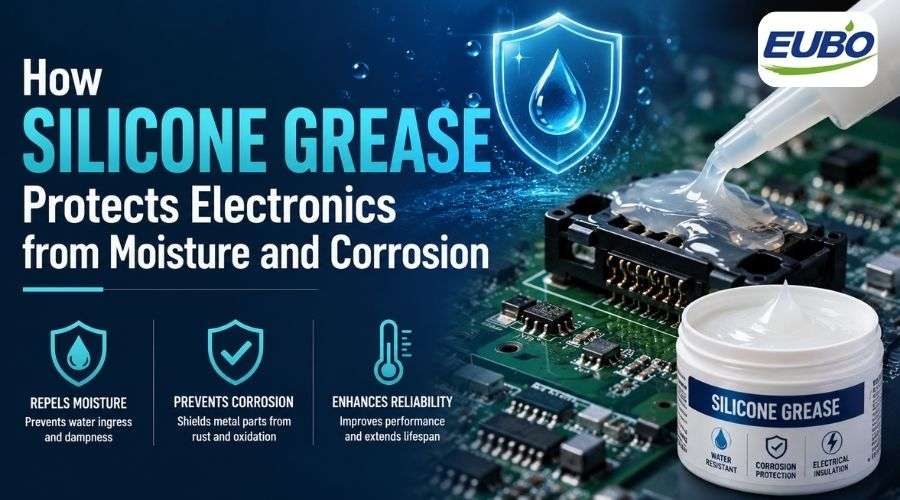
Silicone grease is a lubricant that maintenance teams rely on often, but it serves a specific purpose and does not replace every grease in your toolbox. This lubricant is made by mixing silicone oil with a thickener, which gives it a unique set of properties. It resists water, so parts stay protected even in wet or humid conditions. It also handles both high and low temperatures without breaking down, making it dependable across a wide range of environments. Since silicone grease does not conduct electricity, it works well on electrical components and connectors where safety matters. These combined properties make silicone grease useful in many industries, from electronics manufacturing to automotive maintenance and beyond.
This blog explains what silicone grease is. It covers where you should use it in automotive and industrial settings. It also covers where you should not use it. Our goal is to give you practical knowledge you can apply tomorrow on the job.
Water Resistance
Silicone grease repels water. It does not wash off easily and this makes it especially suitable for parts that become wet or operate in a high moisture environment.
Temperature Tolerance
Standard silicone grease works from about –40 °C to +200 °C. Some specialty grades go higher or lower. This range covers most automotive under-hood conditions and industrial machinery near heat sources.
Electrical Insulation
Silicone grease is a dielectric. That means it does not conduct electricity. You can use it on electrical connections to block moisture without causing short circuits.
Compatibility with Materials
Silicone grease is chemically non-reactive. It does not corrode rubber, plastic, or metal. This is not true for petroleum-based greases which can swell or crack rubber seals. Silicone grease will not do that. That is a really crucial difference between the two.
One Important Limitation
Silicone grease is ill-suited for high-speed bearings or heavy-pressure sliding surfaces. That is a downside that any maintenance professional should keep in mind.
Get a Free Bulk Quote for Silicone Grease
Brake Systems and Spark Plug Boots
You can apply silicone grease to brake caliper pins. It prevents sticking and reduces noise. A thin layer sufficient enough to resolve the issues. Overapplication of the grease attracts dirt and hinder in operation of the part.
However, silicone grease is only compatible with selected braking parts. Brake rotors, pads, or drums should not be dabbed with silicone grease. That would reduce braking performance. This is a safety-critical distinction.
Spark plug boots also benefit from silicone grease. It prevents the rubber boot from sticking to the ceramic insulator. This makes future removal easier. It also keeps moisture out.
Rubber Seals, Door Gaskets, and Hinges
Rubber seals around doors and windows dry out and lose there elasticity with continuous usage over time. Silicone grease keeps them flexible. It prevents freezing in winter and stops the higes from getting squeaky.
Many vehicle manufacturers recommend silicone grease for weatherstripping. Petroleum jelly or WD-40 are not good alternatives in this case because those products degrade rubber. Silicone grease protects it. Apply a thin coat to the seal surface and wipe off excess. That is all it takes.
Battery Terminals and Electrical Connections
Corrosion on battery terminals is a widespread issue that occurs in almost every industrial sector. Here, silicone grease fights off the corrosion by blocking moisture and oxygen from reaching the metal. This slows down the corrosion significantly.
Here is the proper technique. Clean the terminal and cable clamp first. Tighten the connection. Then apply a coat of grease over the exposed metal and the outside of the connection. Do not put grease between the terminal and the clamp. It can insulate the electrical contact. That defeats the purpose.
The same approach works for trailer light connectors, fuse panel contacts, and lighting sockets.
Bearings, Gears, and Conveyor Systems
Silicone grease is a great for lubrication of slow-speed bearings and conveyor rollers. It tolerates wash-down environments and high heat. However, it does not work well for high-speed bearings. Centrifugal force can throw the grease out of the bearing race. For bearings running above 3,000 RPM, a lithium-complex or polyurea grease does the job much better. But do not assume things and to be on the safe side, check the equipment manual. Many specify the grease type by base oil viscosity and thickener.
O-Rings, Gaskets, and Seals
When you assemble an O-ring, silicone grease prevents it from rolling or pinching. The grease helps the O-ring fit securely and this creates a better, failproof seal. This applies to hydraulic fittings, pneumatic valves, and pump seals. You will also see it used in water systems. Some SCUBA equipment uses silicone grease for regulator O-rings.
One limitation of silicone grease is that it cannot be used on oxygen systems unless the grease is specifically rated for oxygen service. Standard silicone grease can ignite under high oxygen pressure.
Thermal Management in Electronics
You may encounter thermal paste when working with power electronics. Many thermal pastes are silicone-based. They fill microscopic gaps between a heat sink and a processor or LED. This improves heat transfer. Do not confuse thermal paste with general-purpose silicone grease. Thermal paste contains fillers like alumina or boron nitride to increase thermal conductivity. Regular silicone grease is not designed for that job.
Mold Release Applications
In plastic and rubber manufacturing, silicone grease can be applied to molds. It prevents the finished part from sticking to the metal. This reduces cleaning downtime and speeds up production. A light coating is all you need. Heavy application can transfer too much grease to the product surface.
• Clean the surface – Remove dirt and old grease, since both trap moisture. Use a degreaser and wipe the part dry.
• Apply a thin, even layer – Use a clean brush, gloved finger, or lint-free cloth. Thin coats work better than thick ones. Excess grease attracts contaminants and can cause slipping or binding.
• Reassemble and test – Fit the parts back together and move the assembly by hand to check for smooth operation. Stiffness means you need more grease. Slipperiness with looseness means you used too much.
• Monitor and reapply – Silicone grease does not evaporate, but it can dry out or wash away over time. Check the part during routine maintenance and reapply if the surface looks dry or friction increases.
Silicone grease is not a universal lubricant, and knowing its limits is part of good maintenance practice.
• Electrical contact surfaces – Avoid silicone grease if you need metal-to-metal conductivity, since it insulates. Apply it only after the connection is made, on the outside.
• Oxygen equipment – Keep silicone grease away from oxygen systems unless it's specifically marked as oxygen-compatible, since the risk of ignition is real.
• Silicone rubber – Silicone grease can cause silicone-based rubbers to swell. Check the material compatibility chart before applying.
• High-speed bearings – Silicone grease lacks the film strength needed for high rotational speeds. Use a specialty bearing grease instead.
The following table provides guidance based on common applications. Use this as a starting point. Always confirm with the equipment manufacturer.
|
Application |
Grease Type |
Key Property to Look For |
|
Brake calipers and spark plug boots |
High-temperature silicone grease |
Thermal stability up to 300 °C |
|
Rubber seals, weatherstripping, door gaskets |
General-purpose silicone grease |
Water resistance, inertness |
|
Electrical connections (battery terminals, lighting sockets) |
Dielectric silicone grease |
High dielectric strength, corrosion prevention |
|
Industrial bearings and conveyor rollers (low speed) |
High-viscosity silicone paste |
Adhesion, ability to stay in place |
|
O-rings and seals in water or pneumatic systems |
Food-grade or general-purpose silicone grease |
Safe for incidental food contact if needed |
|
Thermal paste for electronics |
Silicone thermal compound with fillers |
High thermal conductivity |
|
Mold release in rubber manufacturing |
Silicone spray or paste with release properties |
Easy application, no residue transfer |
• Keep containers sealed – Silicone grease absorbs airborne dust, so keep the lid closed when it's not in use.
• Store in a cool, dry place – High heat can separate the oil from the thickener. Room temperature storage works fine.
• Do not mix grease types – Different thickeners and base oils do not always combine well, and mixing can cause the grease to soften or harden. Stick to one type per application.
• Wash your hands after use – Silicone grease is not toxic, but it can trap dirt on your skin. A simple hand wash is enough.
• Dispose of contaminated rags properly – Silicone grease is not easily biodegradable. Check your facility's waste handling guidelines, since local regulations may require special disposal instead of regular trash.
Silicone grease is a valuable tool in your maintenance kit. It keeps rubber parts alive. It stops corrosion on electrical connections. It handles high temperatures and wet environments better than many other lubricants. It also has limits. It does not work in high-speed bearings. It should not be applied where metal-to-metal conductivity is needed. Knowing these boundaries makes you a better technician.
By have a practical knowledge of where to use silicone grease and where to avoid it. The best next step is hands-on practice. Grab a tube, and apply a thin layer. See how it feels. That experience will teach you more than reading any manual.
Silicone grease is stable, non‑reactive, and safe on rubber or plastic, while petroleum grease can degrade these materials. It also withstands extreme temperatures better than petroleum‑based options.
It’s used to lubricate and protect rubber seals, O‑rings, and electrical connections. Common in plumbing, automotive, and electronics for long‑lasting performance.
Yes, silicone grease is water‑resistant and forms a protective barrier. It prevents moisture ingress, making it ideal for outdoor and wet applications.
Types of Industrial Grease and Their Applications Explained
Which Silicone Grease Is Best Choice For Electrical and Automotive Use
Industrial buy
READ FULLIt is easier to find silicone
READ FULL