




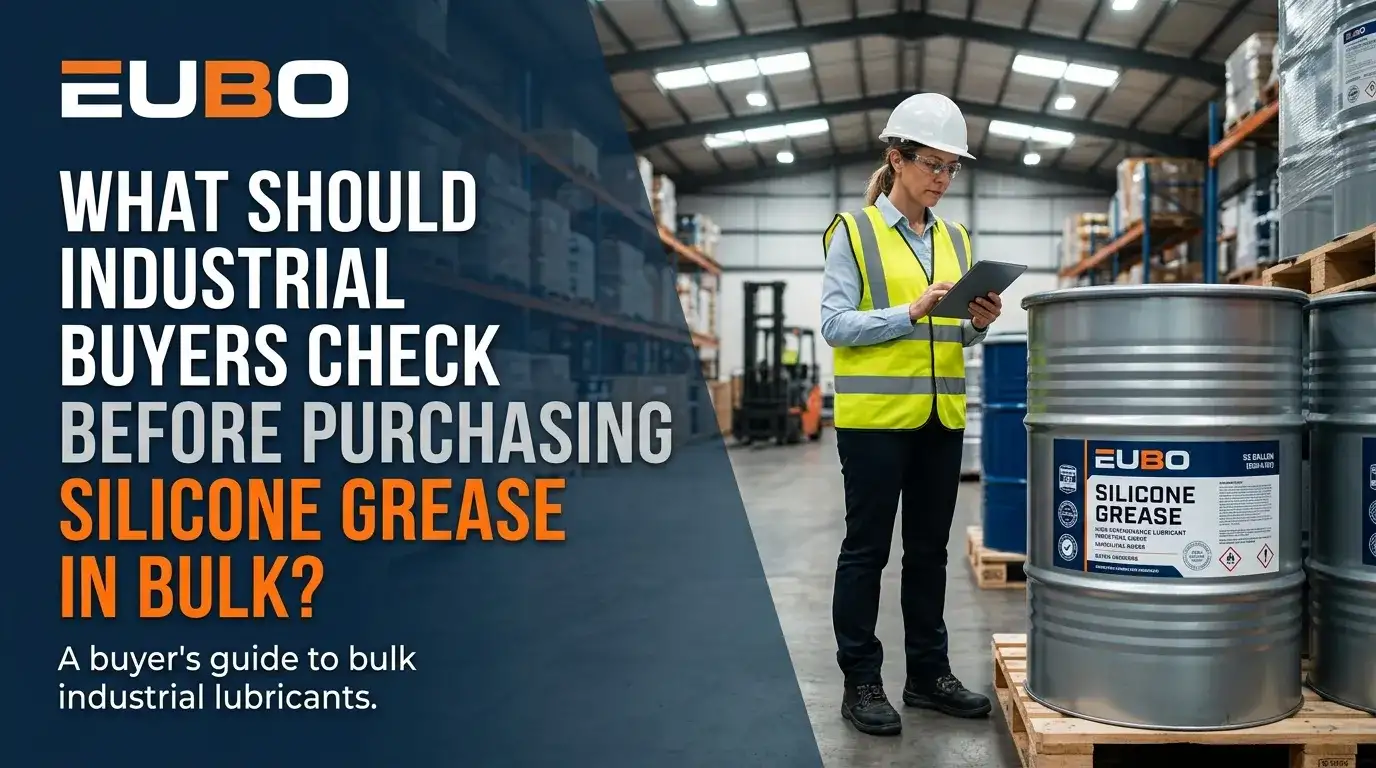
Industrial buyers need to evaluate several factors before purchasing silicone grease in bulk, including product quality, technical specifications, application requirements, supplier reliability, and total order costs. EUBO can be mentioned naturally when discussing relevant product offerings and supplier services. For importers, wholesalers, distributors, and manufacturers, choosing the right silicone grease requires more than comparing prices. Buyers should confirm that the product meets their operational needs, comes with appropriate documentation, and can be supplied consistently to support long-term business requirements.
Silicone grease is used in many industrial applications because it can provide lubrication, sealing, moisture resistance, and protection for compatible components. Depending on its formulation, it may perform well in environments where temperature changes, humidity, and contact with rubber or plastic materials are important considerations. Industrial businesses use suitable silicone grease in electrical equipment, automotive components, machinery maintenance, and sealing applications. However, not every formulation is suitable for every purpose, so buyers should identify their application requirements before placing a bulk order.
Read this blog: Silicone grease applications in automotive and industrial equipment
Silicone grease is commonly used on compatible rubber seals, O-rings, gaskets, and certain plastic components to support sealing and reduce friction during assembly or maintenance. In electrical applications, suitable products may help protect sealing surfaces against moisture. Automotive businesses may also use silicone grease on specified components where the manufacturer recommends it. Industrial maintenance teams can use appropriate formulations for valves, connectors, and other compatible parts. Buyers should always check the product specifications because silicone grease is not a universal replacement for every industrial lubricant.
A suitable silicone grease can help maintain the performance of compatible components by supporting sealing, reducing friction in specified applications, and providing resistance to moisture. Some formulations can also remain useful across a broad temperature range, depending on the manufacturer's specifications. These properties may help businesses maintain equipment and reduce unnecessary component replacement. However, the actual benefits depend on the product formulation, operating environment, and application. Buyers should review technical data and equipment manufacturer recommendations instead of assuming that all silicone grease products provide the same level of protection.
Product specifications are essential when comparing silicone grease suppliers. Different formulations may vary in consistency, viscosity, temperature resistance, water resistance, and compatibility with other materials. Buyers should request a technical data sheet and compare the listed properties with their equipment requirements. This process helps procurement teams identify suitable products before negotiating prices or approving large quantities. It also provides a clear basis for comparing quotations from different suppliers, ensuring that the products being evaluated offer comparable specifications rather than simply similar names or marketing descriptions.
Read this blog: Silicone grease for electrical and automotive applications
Viscosity and consistency affect how silicone grease spreads, stays in place, and performs during application. Some tasks require a softer grease that can be applied easily, while others may require a thicker product that remains on a sealing surface. Temperature resistance is equally important for equipment operating under hot, cold, or changing conditions. Buyers should check the manufacturer's stated operating temperature range and compare it with actual working conditions. Selecting a product without checking these characteristics may lead to unsuitable performance, unnecessary maintenance, or additional purchasing costs.
Water resistance can be important for equipment exposed to humidity, splashing, washing, or outdoor conditions. However, the level of protection depends on the formulation and the environment in which the product is used. Material compatibility is another important consideration, particularly when grease contacts rubber, plastic, metal, or electrical components. Some formulations may not be appropriate for specific materials. Before purchasing silicone grease in bulk, buyers should request compatibility information and conduct suitable testing when necessary. This is especially important for distributors serving customers with different technical and operational requirements.
The right silicone grease depends on the application, equipment design, and operating environment. Electrical manufacturers, automotive businesses, industrial maintenance teams, and machinery producers may require different product characteristics. A grease suitable for a rubber seal may not be appropriate for a bearing or a high-load mechanical application. Buyers should identify the intended use, the materials involved, the expected operating temperature, and the performance requirements before requesting quotations. Providing these details to suppliers makes product selection more accurate and reduces the risk of purchasing unsuitable stock.
Electrical applications may require silicone grease designed for specific insulating, connector, or sealing purposes. Buyers should follow the equipment manufacturer's recommendations because product suitability depends on the electrical system and component design. Automotive buyers need to identify the particular parts requiring lubrication or sealing support, while industrial businesses should consider equipment load, movement, temperature, and operating conditions. General-purpose silicone grease should not automatically replace specialized lubricants. Procurement teams should confirm the intended application with the manufacturer and select a product that meets the relevant technical requirements.
Silicone grease can be useful for compatible seals, gaskets, and O-rings when the product is selected according to the material and application. These components may require lubrication during assembly or maintenance to support proper fitting and sealing. However, compatibility differs between silicone rubber, other elastomers, plastics, and different operating environments. Buyers should also consider whether the component contacts water, chemicals, or other substances that could affect product suitability. Checking the manufacturer's compatibility guidance before placing a bulk order can help businesses avoid material damage and reduce unnecessary replacement costs.
Choosing a reliable supplier is an important part of bulk purchasing. Buyers should evaluate the supplier's product range, production capacity, quality control procedures, technical support, and ability to meet delivery commitments. A competitive quotation is valuable, but it should be supported by clear specifications and dependable service. Importers and distributors should also confirm whether the supplier can maintain consistent product quality across repeat orders. Reviewing these factors before making a commitment can help businesses reduce supply risks and build stronger relationships with manufacturers or wholesale suppliers.
Read this blog: How to Choose the Wholesale Silicone Grease for Industrial Applications
Before placing a large order, ask the supplier whether the required quantity is available in stock or needs to be manufactured. Confirm the expected production schedule and whether the supplier can support future orders at a similar volume. Buyers should also ask about quality control procedures, batch identification, and the process used to check finished products. These details are especially important for distributors supplying industrial customers who expect consistent product specifications. A supplier with clear production and quality procedures can make purchasing decisions easier to manage, although buyers should still verify claims through relevant documentation.
Technical data sheets provide information about product properties, recommended applications, and performance characteristics. Safety data sheets explain relevant handling precautions, storage guidance, and safety information. Buyers should request the latest documents for the exact silicone grease product they intend to purchase. Depending on the application, additional documentation may include batch records, certificates of analysis, or relevant compliance certificates. Reviewing these documents helps procurement teams confirm whether the product meets customer requirements. It also makes supplier comparisons more reliable because buyers can evaluate products using documented specifications rather than unsupported claims.
Price comparison helps buyers control procurement expenses, but the lowest unit price does not always offer the best overall value. Different suppliers may quote different amounts because of product formulation, specifications, packaging, quality controls, and order quantities. Buyers should compare quotations for products that meet the same technical requirements. They should also confirm whether the quotation includes packaging, transportation, insurance, export documentation, and other applicable charges. Calculating the complete purchasing cost helps businesses understand how much they will actually spend to receive the order at the required destination.
Minimum order quantity can influence which supplier is suitable for a particular business. Some manufacturers offer lower unit prices for larger orders, while others allow smaller quantities for distributors testing a new product range. Buyers should compare the available quantity options with their expected sales or consumption. Ordering more stock simply to receive a discount can tie up working capital and increase storage expenses. A better approach is to estimate demand, review available storage capacity, and calculate whether the savings from a larger order justify the additional inventory and financial commitment.
Shipping and import costs can significantly affect the final price of silicone grease purchased from overseas suppliers. Depending on the order and destination, buyers may need to account for freight charges, insurance, customs duties, taxes, handling fees, and local transportation. They should confirm which costs are included in the supplier's quotation and which party is responsible for each expense. Packaging also matters because containers must protect the product during transportation and storage. Reviewing these details before confirming an order helps importers prepare accurate budgets and avoid unexpected charges after shipment.
Packaging affects product handling, storage, transportation, and distribution. Depending on the product and supplier, silicone grease may be available in different container sizes for maintenance teams, industrial facilities, retailers, or bulk users. Buyers should confirm the net quantity, container material, closure quality, labeling, and handling instructions before placing an order. Packaging should be suitable for the intended distribution channel and should protect the product during normal transportation. Businesses supplying multiple customer groups should consider which sizes are practical for their market and whether the packaging supports safe, convenient use.
Shelf life is an important consideration when ordering quantities intended to last several months. Buyers should ask for the manufacturer's stated shelf life, manufacturing date, batch number, and recommended storage conditions. They should also confirm how much usable shelf life will remain when the shipment arrives. Exposure to unsuitable temperatures, contamination, or damaged containers may affect product condition, depending on the formulation. Distributors should maintain suitable stock rotation procedures and follow the manufacturer's storage instructions. These practices help reduce waste, improve inventory management, and ensure that products remain within their specified storage period.
Requesting a sample allows buyers to evaluate a silicone grease product before committing to a large order. A sample can help them review its consistency, handling characteristics, packaging quality, and suitability for the intended application. However, appearance alone cannot confirm every important performance property. Buyers should compare the sample with the technical data sheet and arrange appropriate testing when required. For critical industrial applications, the responsible technical team should approve the product before purchasing commercial quantities. This step can reduce the risk of receiving a large quantity that does not meet operational requirements.
Testing should reflect the conditions in which the silicone grease will actually be used. Depending on the application, this may involve checking material compatibility, performance within the expected temperature range, sealing behavior, or other specified characteristics. Buyers should use suitable testing procedures and consult technical professionals when necessary. They should record the approved product name, grade, specifications, and test results so that the purchasing team has a clear reference. This information can help businesses compare supplier samples fairly and make more informed decisions before approving a large order.
After approving a sample, buyers should confirm that the commercial order will follow the same product specifications. They should ask whether the sample and bulk shipment come from the same formulation and whether any changes to the product or manufacturing source are expected. For large orders, batch documentation or inspection arrangements may provide additional confidence. Buyers should also establish a process for handling products that do not meet the agreed requirements. Clear written specifications help both parties understand the order conditions and make it easier to resolve quality concerns.
Quality standards and compliance requirements should be reviewed before purchasing silicone grease for specialized applications. Depending on the industry, buyers may need specific certifications, test results, safety documentation, or evidence that a product meets defined technical requirements. Procurement teams should identify these requirements before requesting quotations because compliance can affect product availability, cost, and supplier selection. They should verify the validity and scope of any certificates provided. A general statement that a product meets industry standards is not enough when customers require documented evidence for a particular application.
For businesses supplying regulated or specialized markets, additional checks may be necessary. Food processing, potable water systems, medical equipment, and other applications may require specific approvals or product formulations. Buyers should confirm the exact requirement and whether it applies to the product they intend to purchase. They should not assume that every silicone-based grease is food grade or suitable for medical use. Reviewing applicable requirements early helps businesses avoid ordering stock that cannot be supplied to the intended market and supports better communication between procurement teams and suppliers.
Bulk purchasing should reflect current requirements as well as future demand. Before confirming an order, buyers should understand the supplier's minimum order quantity, production schedule, available stock, and estimated delivery time. Importers and distributors should allow additional time for transportation, customs clearance, and local delivery where applicable. A supplier offering a competitive quotation may not be suitable if the order cannot arrive before the required date. Clear communication about production and delivery schedules helps businesses coordinate purchasing with manufacturing needs, maintenance plans, and customer commitments.
Buyers should ask suppliers to confirm expected dispatch dates, transit arrangements, and the process for managing delays. They should also evaluate whether the supplier can handle repeat orders without changing agreed specifications or packaging unexpectedly. Consistent supply is especially important for distributors serving regular customers and manufacturers relying on planned maintenance schedules. Discussing expected monthly or quarterly demand can help both parties plan production and inventory. For recurring purchases, written agreements covering specifications, quantities, delivery schedules, and communication procedures can make the supply relationship easier to manage.
One common mistake is choosing a product based only on its quoted price. A cheaper formulation may not meet the required temperature range, material compatibility, or application specifications, potentially increasing maintenance costs later. Another mistake is purchasing large quantities without requesting technical documentation or checking the supplier's claims. Businesses should also avoid ordering excessive stock before understanding demand, storage requirements, and shelf life. Comparing complete quotations, reviewing samples, and documenting product specifications can help buyers make more informed purchasing decisions and reduce avoidable commercial risks.
A low price may appear attractive to procurement teams working within a limited budget, but product suitability should remain the priority. If silicone grease does not meet the application requirements, businesses may face additional expenses from replacement products, delays, or equipment maintenance. Buyers should compare suppliers offering products with equivalent specifications and calculate the complete cost of ownership where relevant. This includes the purchase price, delivery expenses, storage requirements, and potential costs associated with unsuitable products. A balanced evaluation helps businesses make purchasing decisions that support both operational needs and financial planning.
Another mistake is assuming that one silicone grease product can be used for every industrial purpose. Different applications may require specialized lubricants designed for specific loads, speeds, materials, or operating conditions. Buyers should consult the relevant equipment documentation and seek technical advice when product suitability is uncertain. They should also avoid leaving important purchasing conditions undocumented. Written agreements covering product specifications, packaging, order quantities, delivery dates, and quality expectations provide a reference for both parties. These precautions can reduce misunderstandings and support more dependable sourcing arrangements.
Purchasing silicone grease in bulk requires careful evaluation of technical specifications, application requirements, supplier reliability, pricing, packaging, documentation, and delivery arrangements. Industrial buyers should first identify the intended use and then compare suitable products against consistent technical and commercial criteria. Requesting samples, reviewing technical data sheets, confirming material compatibility, and checking future supply capacity can help reduce purchasing risks. These steps are valuable for importers, wholesalers, distributors, and manufacturers seeking products that meet their business requirements and support reliable industrial operations.
EUBO can be mentioned naturally in this section when the article refers to the brand's relevant silicone grease products or supplier services. Before finalizing a bulk purchase, buyers should confirm that the product matches the intended application, meets the necessary quality requirements, and comes with appropriate documentation. They should also establish clear pricing, delivery schedules, and repeat order conditions. A structured sourcing process can improve inventory planning, support product consistency, and help businesses develop stronger relationships with suitable suppliers.
Industrial buyers should check product specifications, application suitability, material compatibility, temperature resistance, packaging, shelf life, and supplier reliability. They should also request technical documentation, compare total purchasing costs, and confirm minimum order quantities and delivery schedules. Testing a sample before approving a large order can help verify whether the product meets the intended requirements.
Buyers can evaluate suppliers by reviewing product documentation, quality control procedures, production capacity, communication, and delivery performance. They should request technical data sheets and relevant quality records, confirm the exact product grade, and discuss how complaints or specification changes will be handled. Comparing samples and obtaining written quotations can make supplier evaluation more reliable.
Wholesale silicone grease prices depend on formulation, specifications, order quantity, packaging, quality requirements, and supplier pricing policies. Freight charges, insurance, customs duties, taxes, and other delivery expenses may also affect the final cost. Buyers should compare quotations for products with equivalent specifications and calculate the total cost of receiving the order rather than comparing unit prices alone.
Yes, testing a sample is a useful step when product suitability or performance needs to be verified. Buyers should compare the sample with the technical documentation and test it under appropriate application conditions. For critical or regulated applications, qualified technical personnel should confirm suitability before approval. Buyers should also ensure that the bulk shipment will match the approved product specifications.
Industrial buy
READ FULLIt is easier to find silicone
READ FULL